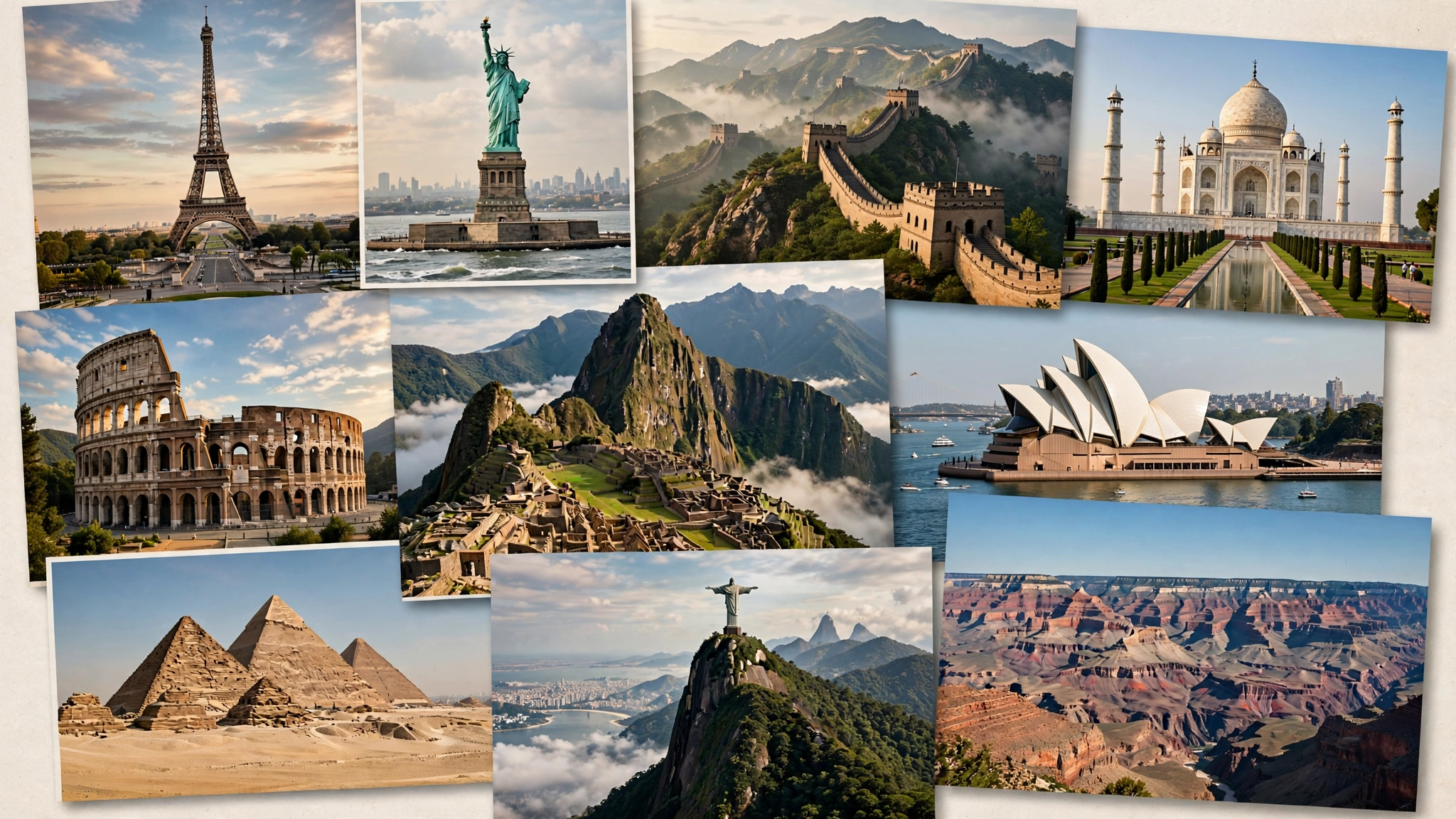
Travel allows people to experience different cultures, landscapes, traditions, and historic places. Around the world, there are thousands of attractions that welcome visitors every year, but some landmarks have become especially famous because of their history, architecture, natural beauty, or cultural importance.
From ancient monuments to modern landmarks, these destinations offer travelers the opportunity to see places they may have previously encountered only in photographs or documentaries.
In this guide, we explore 10 of the world’s most famous tourist attractions and explain what makes each destination worth knowing about.
1. Eiffel Tower – Paris, France
The Eiffel Tower is one of the most recognizable landmarks in the world. Located in Paris, France, it has become strongly associated with the city’s identity and attracts visitors from around the globe.
The tower was constructed for the 1889 Exposition Universelle, a world’s fair held in Paris. Its distinctive iron structure made it an impressive engineering achievement for its time.
Today, visitors can explore different levels of the tower and enjoy views across Paris. The surrounding area also offers opportunities to experience the city’s streets, gardens, museums, cafés, and historic architecture.
The Eiffel Tower is particularly popular among travelers interested in architecture, photography, history, and city tourism.
Why Visit the Eiffel Tower?
Visitors may enjoy:
- Views of Paris
- Historic architecture
- Photography opportunities
- Nearby parks and attractions
- The atmosphere of central Paris
The landmark is also especially recognizable when viewed from different parts of the city.
2. Statue of Liberty – New York City, USA
The Statue of Liberty stands on Liberty Island in New York Harbor and is one of the most recognizable symbols associated with the United States.
The statue was a gift from France to the United States and was dedicated in 1886. Over time, it became an important symbol of freedom and has welcomed millions of visitors.
Travelers can take a ferry to the island and explore the area around the monument. Depending on access and ticket options, visitors may also be able to enter parts of the monument.
The surrounding New York Harbor provides views of the city’s skyline, making the visit interesting for both history enthusiasts and first-time travelers to New York.
What Makes It Famous?
The Statue of Liberty combines history, architecture, and symbolism. Its location also provides an opportunity to experience views of New York Harbor and the Manhattan skyline.
3. Great Wall of China – China
The Great Wall of China is one of the world’s most famous historic structures. Rather than being a single wall built at one time, it is a vast network of walls and defensive structures constructed and modified across different periods of Chinese history.
Several sections are accessible to visitors, with some areas restored for tourism and others offering a more rugged experience.
Walking along the wall can provide impressive views of mountains and surrounding landscapes.
Why Is the Great Wall Important?
The Great Wall represents a remarkable chapter in Chinese history and engineering. Its enormous scale makes it one of the most memorable attractions for travelers interested in ancient civilizations.
Visitors should choose their section carefully because different areas vary in accessibility, scenery, crowd levels, and walking difficulty.
4. Taj Mahal – Agra, India
The Taj Mahal in Agra, India, is one of the world’s most famous architectural landmarks. Built during the Mughal period, the monument is widely recognized for its white marble architecture and detailed decorative work.
The Taj Mahal was commissioned by Mughal emperor Shah Jahan in memory of his wife Mumtaz Mahal.
Today, visitors travel to Agra to experience the monument, its surrounding gardens, and the broader historical attractions of the city.
The changing light throughout the day can also create different visual appearances, making the site especially popular with photographers.
What Can Visitors Experience?
A visit can include:
- The famous marble monument
- Mughal architecture
- Formal gardens
- Detailed decorative elements
- Historical surroundings
The Taj Mahal is particularly appealing to travelers interested in architecture, history, photography, and cultural heritage.
5. Colosseum – Rome, Italy
The Colosseum is an ancient amphitheater located in the heart of Rome. Construction began during the first century CE, and the structure became an important venue for public spectacles in ancient Rome.
Today, the Colosseum is one of the most recognizable archaeological landmarks in Italy.
Visitors can explore designated areas of the ancient structure and learn about Roman engineering, architecture, and history.
The attraction is also located near other important historic sites, allowing travelers to combine a visit with a broader exploration of ancient Rome.
Why Visit the Colosseum?
The Colosseum offers travelers an opportunity to experience:
- Ancient Roman architecture
- Archaeological history
- Historic city views
- Roman engineering
- Nearby ancient landmarks
Its age, scale, and historical importance make it one of the most famous attractions in Europe.
In the next part, we will continue with five more famous tourist attractions from around the world.
6. Machu Picchu – Peru
Machu Picchu is one of the most famous archaeological destinations in South America. Located high in the Andes Mountains of Peru, this historic Inca site is known for its stone structures, mountain scenery, and remarkable location.
The ancient settlement is believed to have been built during the 15th century. Its exact purpose remains a subject of historical study, but its architecture and surrounding landscape have made it one of the world’s most recognizable cultural attractions.
Visitors usually travel through the nearby city of Cusco before continuing toward the Machu Picchu area. The journey itself can be part of the experience, with mountain landscapes and traditional communities along the way.
Why Is Machu Picchu Famous?
Machu Picchu is special because of the combination of:
- Ancient Inca architecture
- Mountain scenery
- Archaeological significance
- Unique location
- Cultural history
The site is especially attractive to travelers who enjoy history, hiking, photography, and natural landscapes.
Because of its altitude and mountain terrain, visitors should plan their trip carefully and follow local visitor guidance.
7. Sydney Opera House – Sydney, Australia
The Sydney Opera House is one of Australia’s most recognizable landmarks. Located beside Sydney Harbour, the building is famous for its distinctive roof structures that resemble sails.
The building opened in 1973 and has become an important center for performing arts and cultural events.
Even travelers who do not attend a performance can appreciate the building from the surrounding harbor area. The nearby waterfront also provides excellent views of the Sydney skyline and Sydney Harbour Bridge.
Things to Experience Around the Sydney Opera House
Visitors can enjoy:
- Architectural views
- Sydney Harbour
- Cultural performances
- Waterfront walks
- Photography
- Nearby restaurants and public spaces
The combination of architecture, waterfront scenery, and cultural significance makes the Sydney Opera House a major attraction for international visitors.
8. Pyramids of Giza – Egypt
The Pyramids of Giza are among the most famous ancient monuments in the world. Located near Cairo, Egypt, the complex includes several pyramids and the Great Sphinx.
The Great Pyramid of Giza is the largest of the three major pyramids and is one of the surviving monuments associated with the ancient Seven Wonders of the World.
The pyramids were built as monumental tombs during ancient Egypt’s Old Kingdom. Their enormous size and sophisticated construction continue to attract historians, researchers, and travelers.
Why Visit the Pyramids?
A visit to the Giza complex offers an opportunity to experience:
- Ancient Egyptian architecture
- Historic monuments
- The Great Sphinx
- Desert landscapes
- Thousands of years of history
The surrounding Cairo region also provides access to museums and other historical attractions.
Travelers should follow official visitor guidance and consider local conditions when planning their visit, particularly because the area can be very hot during certain times of the year.
9. Christ the Redeemer – Rio de Janeiro, Brazil
Christ the Redeemer is a monumental statue overlooking Rio de Janeiro from the summit of Mount Corcovado.
Completed in 1931, the statue has become one of the most recognizable symbols of Brazil and Rio de Janeiro.
The location is one of its biggest attractions. From the mountain, visitors can see large portions of Rio, including beaches, mountains, and urban areas.
What Makes Christ the Redeemer Special?
The attraction combines:
- Monumental architecture
- Religious and cultural history
- Mountain scenery
- City views
- Photography opportunities
The surrounding Tijuca National Park also adds natural beauty to the experience.
Visitors can reach the attraction through established transportation options and should check current access information before traveling.
10. Grand Canyon – Arizona, USA
The Grand Canyon is one of the world’s most famous natural attractions. Located in northern Arizona, the canyon was shaped over millions of years by geological processes, including erosion by the Colorado River.
Its enormous size and colorful rock layers make it a remarkable destination for travelers interested in nature and geology.
Different areas of the Grand Canyon offer different experiences. The South Rim is especially popular and provides numerous viewpoints, trails, visitor facilities, and educational opportunities.
Activities at the Grand Canyon
Depending on the area and conditions, visitors can enjoy:
- Scenic viewpoints
- Hiking
- Photography
- Nature observation
- Educational programs
- Sunrise and sunset views
The Grand Canyon can be physically demanding in some areas. Visitors should plan according to weather conditions, trail difficulty, available water, and their own experience.
Exploring Famous Attractions Responsibly
Visiting famous landmarks can be an exciting experience, but responsible tourism is important.
Travelers should respect local rules, protect historical sites, avoid damaging natural environments, and follow instructions from park authorities or site managers.
It is also useful to research opening hours, ticket requirements, transportation, weather, and visitor restrictions before traveling.
In the next part, we will look at how to plan visits to famous attractions, choose the right time to travel, manage a travel budget, and make the most of a landmark visit.
How to Plan a Visit to a Famous Tourist Attraction
Visiting a world-famous attraction can be an unforgettable experience, but good planning can make the trip much easier. Popular landmarks can become crowded, especially during holidays and peak travel seasons.
Before traveling, research the destination carefully and make a simple plan based on your budget, available time, and interests.
Choose the Right Time to Visit
The timing of your trip can have a major effect on your experience.
Some destinations are more comfortable during certain seasons, while others may be attractive throughout the year.
When planning your visit, consider:
- Weather conditions
- Tourist seasons
- Local holidays
- Opening hours
- Expected crowds
- Transportation availability
Visiting early in the morning can sometimes provide a quieter experience at popular attractions.
Check Tickets and Entry Requirements
Many famous attractions require tickets or reservations, particularly when visitor numbers are controlled.
Before leaving, check the attraction’s official information for:
- Ticket prices
- Opening hours
- Reservation requirements
- Entry rules
- Photography policies
- Visitor restrictions
Booking through official channels can also help travelers avoid unreliable third-party information.
Create a Travel Budget
International travel can become expensive if you do not plan your expenses in advance.
Your budget may include:
- Flights
- Hotels
- Local transportation
- Attraction tickets
- Food
- Travel insurance
- Souvenirs
- Emergency expenses
You do not necessarily need to spend a large amount of money to enjoy a destination. Comparing accommodation and transportation options can help you manage costs.
Research the Local Area
A famous attraction is often only one part of a larger destination.
For example, someone visiting the Eiffel Tower can explore other parts of Paris. A traveler visiting the Colosseum can discover additional historical sites in Rome.
Before traveling, identify nearby attractions that you may want to visit.
This can help you organize your daily schedule more efficiently and reduce unnecessary travel between locations.
Respect Local Culture
Every destination has its own customs, traditions, and expectations.
Travelers should research basic local etiquette before arriving.
Simple actions such as dressing appropriately where required, respecting religious or cultural sites, following photography rules, and treating local communities politely can make travel experiences more positive.
Responsible tourism also means avoiding behavior that could damage historic buildings, natural environments, or cultural sites.
Protect Natural Attractions
Natural attractions such as the Grand Canyon require special care.
Visitors should:
- Follow marked trails
- Avoid leaving litter
- Respect wildlife
- Follow park instructions
- Stay within designated areas
- Avoid damaging plants or geological features
Small actions from individual travelers can help protect destinations for future visitors.
Take Photos Without Missing the Experience
Photography is one of the most popular parts of modern travel. Famous landmarks often provide excellent opportunities for photographs.
However, travelers should also take time to experience the destination without constantly looking through a camera or phone.
Take a few photographs, then put the device away and appreciate the surroundings.
Learn the History Before You Visit
Understanding the background of an attraction can make the experience much more meaningful.
Before visiting, learn a little about:
- When it was built
- Who created it
- Why it was important
- How it changed over time
- Its cultural significance
Even basic historical knowledge can help you understand why a landmark became famous.
Choose Experiences That Match Your Interests
Not every famous attraction will appeal equally to every traveler.
Someone interested in history may prefer ancient monuments such as the Colosseum or Pyramids of Giza.
Someone interested in architecture might enjoy the Eiffel Tower or Sydney Opera House.
Nature lovers may prefer the Grand Canyon or mountain destinations such as Machu Picchu.
Choosing destinations based on your interests can make your trip more enjoyable.
Travel With Realistic Expectations
Photographs online can sometimes create unrealistic expectations. A famous attraction may look quiet and perfect in professional photographs but feel very different when thousands of visitors are present.
Crowds, weather, construction, transportation delays, and other factors can affect a trip.
Having realistic expectations can help you enjoy the experience rather than becoming disappointed when conditions are not perfect.
Keep Important Documents Safe
International travelers should keep important documents organized.
Depending on the trip, these may include:
- Passport
- Visa documents
- Travel bookings
- Identification
- Emergency contact information
- Travel insurance details
Digital copies can also be useful, provided they are stored securely.
Make the Most of Your Visit
A successful trip does not necessarily mean visiting the largest number of attractions.
Instead, focus on experiencing a destination properly.
Give yourself enough time to explore, learn about the location, enjoy the surrounding area, and rest when necessary.
A balanced itinerary can be more enjoyable than trying to visit too many places in a single day.
In the next part, we will compare the attractions covered in this guide and look at what makes historic, cultural, architectural, and natural destinations different from one another.
Comparing Different Types of Tourist Attractions
The attractions discussed in this guide are famous for different reasons. Some are important because of their history, while others are known for architecture, culture, natural beauty, or their connection to a particular city.
Understanding these differences can help travelers choose destinations that match their interests.
Historic Attractions
Historic attractions allow visitors to experience places connected to earlier civilizations and important periods of human history.
Examples from this list include:
- Great Wall of China
- Taj Mahal
- Colosseum
- Machu Picchu
- Pyramids of Giza
These destinations can provide insight into ancient societies, architecture, engineering, traditions, and historical events.
For travelers who enjoy history, visiting a historic landmark can feel like stepping into another period of time.
Architectural Attractions
Some landmarks are famous primarily because of their design and construction.
The Eiffel Tower and Sydney Opera House are good examples.
The Eiffel Tower demonstrates the possibilities of large-scale iron construction from the late 19th century, while the Sydney Opera House is recognized for its distinctive modern architecture.
Architectural attractions can be particularly interesting for people who enjoy photography, design, engineering, and urban environments.
Natural Attractions
Not every famous tourist attraction was built by humans.
The Grand Canyon is an example of a destination whose popularity comes from natural geological features.
Machu Picchu also combines human construction with a dramatic natural setting in the Andes.
Natural destinations can provide opportunities for sightseeing, hiking, photography, and learning about geology and ecosystems.
Cultural Attractions
Many famous landmarks are closely connected to the culture and identity of their location.
The Taj Mahal is an important example of South Asian and Mughal-era architectural heritage. The Statue of Liberty has become strongly associated with American history and ideas of freedom.
Cultural attractions can help visitors understand how a place developed and why certain landmarks became important symbols.
City Landmarks
Some attractions have become closely connected with the cities where they are located.
The Eiffel Tower is strongly associated with Paris.
The Statue of Liberty is closely connected with New York Harbor.
The Sydney Opera House is one of the defining landmarks of Sydney.
Christ the Redeemer is a famous symbol of Rio de Janeiro.
These landmarks can be a useful starting point for travelers exploring a major city for the first time.
Which Attraction Is Best for History Lovers?
Travelers who enjoy history may prefer attractions such as the Colosseum, Great Wall of China, Pyramids of Giza, Taj Mahal, and Machu Picchu.
Each destination provides a different perspective on the past.
Ancient monuments can reveal information about engineering and societies, while later landmarks can help visitors understand more recent cultural and political developments.
Which Attraction Is Best for Nature Lovers?
Nature enthusiasts may prefer the Grand Canyon because of its dramatic landscapes and geological features.
Machu Picchu can also appeal to nature lovers because of its mountain setting.
However, travelers should remember that natural destinations often require more preparation than urban landmarks.
Weather, terrain, walking distances, and local safety rules can all affect the experience.
Which Attractions Are Best for Photography?
Almost all of the destinations in this guide provide interesting photography opportunities.
The Eiffel Tower offers city views and architectural compositions.
The Taj Mahal provides detailed architectural photography.
The Grand Canyon offers large-scale landscape views.
Machu Picchu combines historic structures with mountain scenery.
The Sydney Opera House provides distinctive architecture alongside Sydney Harbour.
Good photographs often depend more on lighting, composition, timing, and patience than expensive equipment.
Why Do Tourist Attractions Become Famous?
There is no single reason a landmark becomes internationally famous.
Several factors can contribute to its popularity:
Historical Importance
A location connected to major historical events or civilizations may attract visitors and researchers.
Unique Architecture
Unusual or impressive structures often become recognizable symbols.
Natural Beauty
Dramatic landscapes can attract travelers from around the world.
Cultural Significance
Landmarks associated with important traditions or cultural identities may become major tourist destinations.
Media and Photography
Films, documentaries, books, photographs, and social media can introduce destinations to people who have never visited them.
Responsible Travel Matters
The popularity of famous destinations can create challenges, including overcrowding, environmental pressure, and wear on historic structures.
Travelers can help by following local regulations, avoiding litter, respecting cultural rules, and choosing responsible tourism practices.
When visiting natural areas, staying on designated paths and respecting wildlife can help protect the environment.
At historic locations, visitors should avoid touching or damaging structures unless permitted.
Creating Your Own Travel List
There is no universal ranking of the world’s best tourist attractions.
Your ideal travel list depends on your interests, budget, available time, and preferred travel style.
A history enthusiast may prioritize ancient monuments. An architecture lover may focus on famous buildings. A nature enthusiast may choose landscapes and national parks.
The best destination is often the one that matches what you genuinely want to experience.
In the final part, we will summarize the 10 attractions and explain how travelers can use this list to plan future international trips.
A Final Look at the World’s Most Famous Attractions
The world is filled with remarkable places, but some tourist attractions have become globally recognized symbols of history, culture, architecture, and natural beauty.
The 10 attractions discussed in this guide each offer a different travel experience. Some take visitors into the distant past, while others showcase modern architecture or spectacular natural landscapes.
Here is a final overview of the destinations covered in this article.
1. Eiffel Tower – France
The Eiffel Tower represents Paris and is one of the most recognizable structures in the world.
Its impressive iron design, location, and views of the French capital make it a popular destination for travelers interested in architecture, photography, and city tourism.
A visit to Paris would not be complete for many travelers without seeing this famous landmark.
2. Statue of Liberty – United States
The Statue of Liberty stands in New York Harbor and is an internationally recognized symbol of the United States.
Its history, connection to immigration and freedom, and location near the Manhattan skyline make it an important attraction for visitors from around the world.
3. Great Wall of China – China
The Great Wall represents one of the most remarkable achievements in ancient defensive architecture.
Its enormous scale, mountainous surroundings, and long history make it an unforgettable destination for travelers interested in history and engineering.
Different sections provide different experiences, so travelers should research the area they plan to visit.
4. Taj Mahal – India
The Taj Mahal is famous for its white marble architecture, detailed craftsmanship, gardens, and historical significance.
Located in Agra, it is one of India’s most recognizable landmarks and attracts visitors interested in architecture, history, culture, and photography.
5. Colosseum – Italy
The Colosseum provides a connection to ancient Roman history.
Its massive structure demonstrates the architectural and engineering abilities of the Roman era. Located in Rome, it can also be combined with visits to numerous other historic locations in the city.
6. Machu Picchu – Peru
Machu Picchu combines ancient architecture with dramatic mountain scenery.
Its remote location and connection to the Inca civilization make it one of the most memorable archaeological destinations in the world.
Travelers interested in hiking, history, photography, and nature may find it particularly appealing.
7. Sydney Opera House – Australia
The Sydney Opera House represents modern architecture and Australia’s cultural identity.
Its distinctive design beside Sydney Harbour makes it one of the country’s most recognizable landmarks.
Visitors can enjoy the building itself, cultural performances, harbor views, and the surrounding waterfront.
8. Pyramids of Giza – Egypt
The Pyramids of Giza connect modern travelers with one of the world’s most famous ancient civilizations.
The Great Pyramid, the other major pyramids, and the Great Sphinx create an extraordinary historical landscape near Cairo.
For people interested in ancient history and archaeology, the Giza complex offers a unique experience.
9. Christ the Redeemer – Brazil
Christ the Redeemer overlooks Rio de Janeiro from Mount Corcovado.
The monument is famous for its enormous scale, cultural significance, and spectacular views across the city.
The surrounding natural environment also adds to the attraction.
10. Grand Canyon – United States
The Grand Canyon is different from many of the other attractions on this list because its fame comes primarily from natural geological features.
Its enormous size, rock formations, and landscapes make it a popular destination for nature lovers, photographers, hikers, and travelers interested in geology.
How to Choose Your Next Destination
Choosing a tourist attraction does not have to be based only on popularity.
Think about the type of experience you want.
If you love history, consider destinations such as the Colosseum, Great Wall of China, Pyramids of Giza, or Machu Picchu.
If you enjoy architecture, the Eiffel Tower, Taj Mahal, and Sydney Opera House may be more interesting.
If you prefer nature, the Grand Canyon and the mountain surroundings of Machu Picchu offer very different experiences.
If you enjoy city travel, Paris, New York, Rome, Sydney, and Rio de Janeiro provide opportunities to explore famous landmarks along with local neighborhoods, food, museums, and culture.
Plan Before You Travel
Before visiting any major attraction, check current information from official sources.
Look for details about:
- Opening hours
- Tickets and reservations
- Transportation
- Weather
- Local rules
- Visitor restrictions
- Accessibility
- Safety information
Conditions can change, so travelers should avoid relying entirely on old information found online.
Make Travel About the Experience
Famous landmarks are more than places to take photographs.
They can provide opportunities to learn about different civilizations, understand other cultures, appreciate architecture, explore natural environments, and create lasting memories.
Take photographs, but also spend time observing the surroundings and learning about the destination.
Respect local communities, protect historic sites, and follow environmental guidelines when visiting natural attractions.
Final Conclusion
The world’s most famous tourist attractions represent an incredible variety of human history, culture, architecture, and natural beauty.
From the Eiffel Tower in Paris and the Statue of Liberty in New York to the ancient Pyramids of Giza and the dramatic Grand Canyon, each destination offers something different.
There is no single attraction that is perfect for every traveler. The best choice depends on your interests, budget, available time, and preferred type of experience.
Whether your dream trip involves exploring ancient ruins, photographing famous architecture, walking through historic locations, or experiencing spectacular landscapes, the world offers countless destinations to discover.
The most important part is to plan responsibly, respect the places you visit, and enjoy the journey as much as the destination itself.
